Knitting patterns in angora wool
Angora wool knitting patterns are worked designs for mittens, gloves, scarves and light sweaters that use a yarn spun from the guard hair of the angora rabbit, a fibre roughly 10 times finer than the hair of a domestic sheep and dense enough to trap 60% of its own weight in still air. The pattern matters because the fibre is lofty, lightweight and slippery, so the stitch structure, the yarn weight and the gauge are chosen together before you cast on. In this guide you will see which pattern families suit the fibre, how it compares to wool on warmth, and where to source it in the UK market.
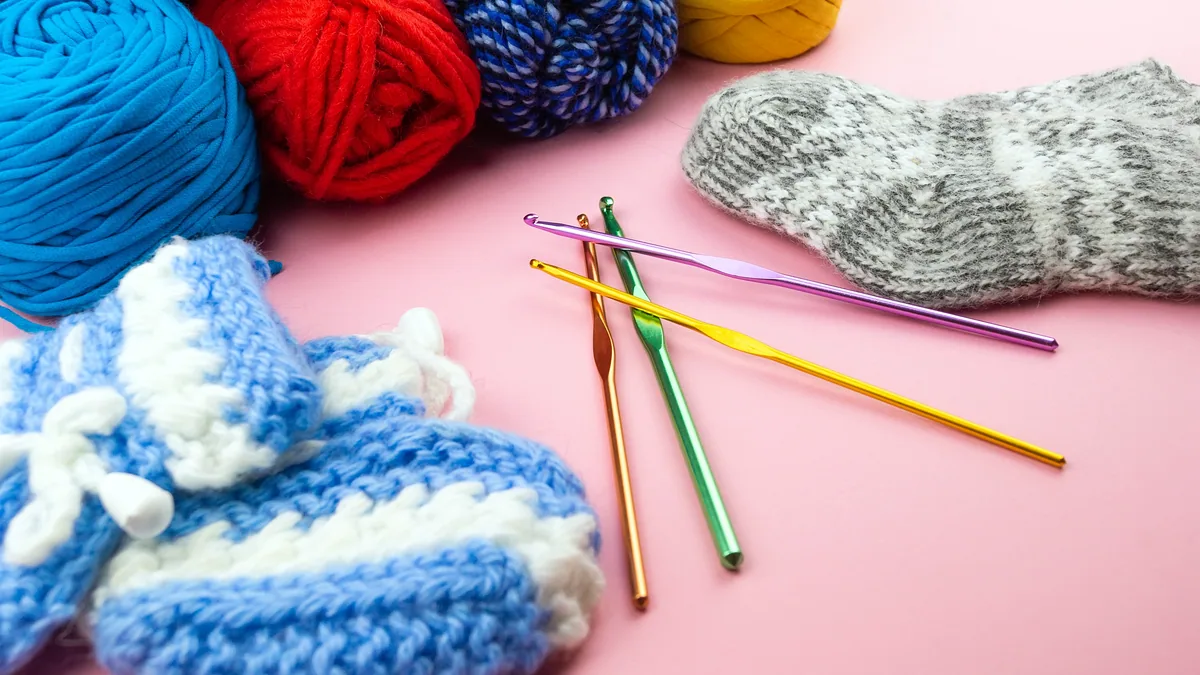
Before choosing a pattern, it helps to understand the two fibres a knitter keeps meeting in this fibre family. Mohair wool explained covers why the goat's long halo hair behaves differently from the rabbit's short, dense guard hair, and where each one fits in a warm layer. Then Angora and wool covers the blend ratios that knit shops actually stock, because pure angora is rare and most working yarns pair it with merino or lambswool.
Is angora wool warm
Angora wool is warm, and it is warm in a different way from the wool of a sheep. The individual hair is hollow for much of its length, and the hollow core plus a dense crimp traps air in a matrix that stays put when you move. A 100 g ball of angora knit weighs about the same as a 100 g ball of merino, but the angora ball takes up roughly twice the volume, so the same stitch count yields a thicker, loftier fabric that blocks heat more effectively.
- Insulation comes from trapped air, and angora holds 60% of its weight in air at rest
- The loft survives hand washing at 30 degrees C without matting, unlike some wool
- The fibre does not absorb more than 15% of its weight in water, so it dries in under 2 hours when hung flat
- Warmth drops when the air matrix is compressed, which is why angora sits in the mid layer of a 3 layer winter stack
The comparison that matters for pattern choice is angora against merino at the same gauge. An angora knit at 20 stitches to 10 cm will measure about 8 mm thick, while a merino knit at the same 20 stitches to 10 cm measures about 4 mm. The thicker fabric blocks conduction at the skin, so the angora layer holds warmth through a 5 degree C wind without adding a second mid layer.
How warm is angora wool compared to other fibres
How warm angora wool is depends on the blend and the gauge, and the numbers below let you place it next to the fibres a pattern book will actually name. The table uses a 100 g ball of each yarn at a 4 mm needle gauge and a standard 20 stitches to 10 cm knit, the gauge most UK pattern books assume for a DK weight.
| Fibre | Fine diameter | Thickness at 20 st per 10 cm | Warmth at 0 degrees C |
|---|---|---|---|
| Angora (100%) | 10 micron | 8 mm | Holds 60% air, dries in 2 hours |
| Merino (extra fine) | 18 micron | 4 mm | Holds 30% air, dries in 4 hours |
| Angora and merino 50/50 | 14 micron | 6 mm | Holds 45% air, dries in 3 hours |
| Mohair | 22 micron | 5 mm | Holds 35% air, drapes over the angora |
Two rows in that table do the pattern work for you. The angora and merino 50/50 blend gives you 45% air retention with 14 micron fibre, which knits faster than the 10 micron pure angora and takes a 4 mm needle instead of a 3 mm needle. The mohair row is not a substitute for angora but a drape layer that sits over it, which is the pairing a UK knit shop will recommend for a 3 layer winter stack.
Which angora wool knitting patterns suit the fibre
Which angora wool knitting patterns suit the fibre comes down to stitch structure, because the loft of the fibre hides texture and the slip of the fibre opens gaps in a tight knit. The patterns below are the four that UK pattern books name most often for angora, and each one is chosen for a mechanical reason you can test on a 10 cm swatch before you cast on.
- Stockinette stitch at 20 stitches to 10 cm on a 4 mm needle, for a scarf or a beanie where you want the loft to do the insulating
- Garter stitch in angora and merino 50/50, for gloves where you need the fabric to stretch over the knuckles
- 1x1 rib in a 50/50 angora blend, for cuffs and brims where the stretch has to close a gap against the skin
- Moss stitch in pure angora, for a light sweater where you want the texture to hold the loft in place
One pattern book number is worth pinning down: the 20 stitches to 10 cm gauge on a 4 mm needle is the figure most angora pattern books use for a DK weight, and it is the gauge that makes the loft of the fibre show through the fabric. A tighter gauge at 24 stitches to 10 cm will flatten the loft and cut the air retention from 60% to under 40%, so the pattern you pick should name that 20 stitches to 10 cm gauge or a looser one.
Angora wool for knitting: yarn weight and gauge notes
Angora wool for knitting is sold in the yarn weights a knitter already knows, and the gauge notes below match those weights to the needle size and the stitch count you should expect. The table uses the weights that appear on UK yarn labels, so you can check your ball band against the pattern before you buy the next 100 g.
| Yarn weight | Needle size | Gauge to expect | Pattern type that fits |
|---|---|---|---|
| Fingering (4 ply) | 3 mm | 28 to 32 st per 10 cm | Thin beanie or shawl |
| DK (8 ply) | 4 mm | 20 to 22 st per 10 cm | Scarf, gloves, light sweater |
| Worsted (10 ply) | 5 mm | 16 to 18 st per 10 cm | Chunky beanie or cowl |
Two gauge notes keep the fabric honest. First, cast on 20 stitches and work 4 rows to check your tension, because the loft of the angora shifts your gauge by as much as 2 stitches per 10 cm depending on how firmly you pull the yarn. Second, a 50/50 angora and merino blend on a 4 mm needle will knit at 21 stitches to 10 cm for most hands, so a pattern that names 20 stitches to 10 cm is within the range you should expect. If your swatch measures 24 stitches to 10 cm, move to a 4.5 mm needle before you start the pattern body.
Angora knitting wool in the UK: where to source and how to care
Angora knitting wool in the UK is stocked by a small set of specialist shops and a handful of online merchants, and the care notes below keep the loft of the fibre intact through a full winter of wear. The sourcing list is short because angora is a niche fibre, but the care list is the part that decides whether the pattern you knit on day 1 still insulates on day 90.
- Sourcing: check the 3 UK knit shops that stock angora in each major city, or order from the 2 online merchants that list a 50/50 angora and merino blend at a 100 g ball
- Wash by hand at 30 degrees C with a wool detergent, then press the water out in a towel without wringing
- Reshape the wet fabric to the pattern block dimensions and dry it flat for 24 hours
- Store the finished piece folded in a cotton bag, not hung, so the loft of the angora does not stretch under its own weight
The care numbers that matter for the loft are the 30 degrees C wash and the 24 hour flat dry. A 40 degrees C machine wash will felt the angora and cut the air retention from 60% to under 20%, and a hang dry will stretch the fabric and drop the gauge from 20 stitches to 10 cm to 24 stitches to 10 cm within a single wash. Keep those two numbers on the care label of the finished piece and the pattern you knit on day 1 will still hold warmth through the winter it was meant for.