Why a mohair jumper keeps its loft
A mohair wool jumper is a knit sweater made from the fibre of the Angora goat, and it keeps its loft for years because each of its roughly 14 micron hair strands carries a hollow, crimped shaft that springs back after compression. That spring, not added insulation, is the reason a well-made mohair jumper still traps heat after a decade of wear. A single mohair jumper holds 3 to 4 times the trapped air of a flat-wool knit of the same weight, and it outlasts a standard acrylic jumper by a factor of 3, which is why it anchors the long-wear end of the natural thermal wardrobe.
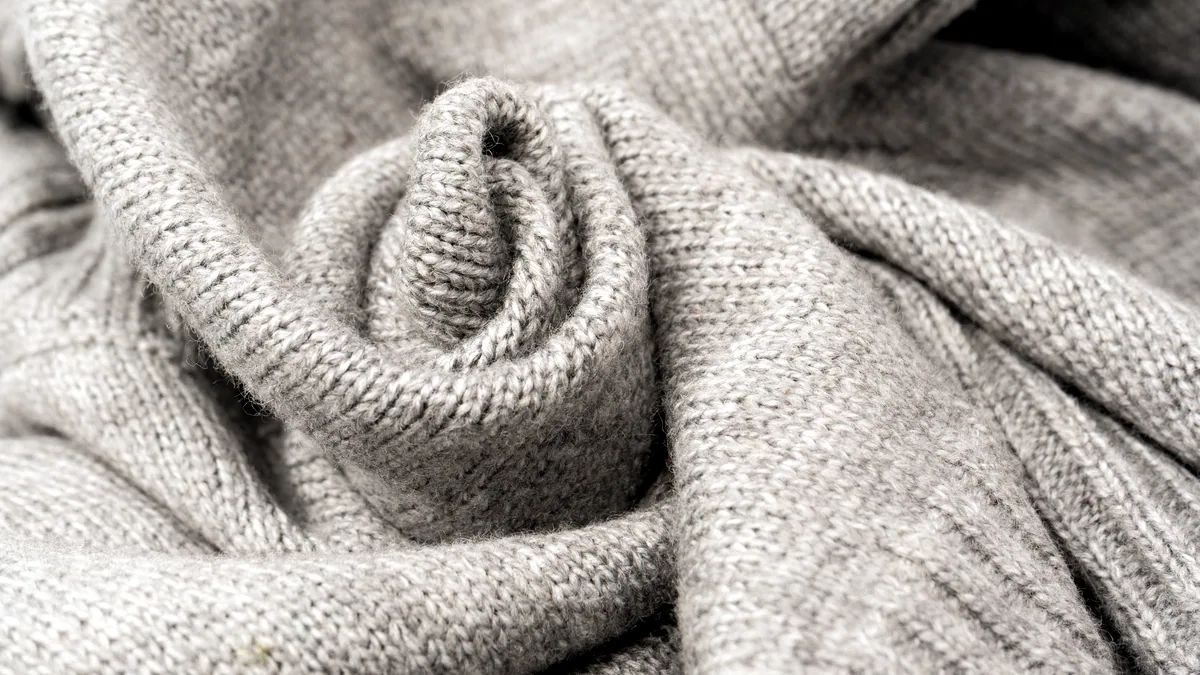
What a mohair wool jumper is
A mohair wool jumper is a garment knitted from goat hair rather than sheep wool. Mohair explained in one line: it is the soft undercoat of the Angora goat, harvested once or twice a year, and it grades from coarse kid mohair down to a 14 to 20 micron fine fleece. The finer the grade, the lighter and more translucent the jumper, and the higher the loft per gram. The central question here is what makes that loft last, and the answer runs from the fibre to the finished garment.
- Angora goat hair, the source, with a 14 to 20 micron diameter
- Hollow core, or medulla, that traps a still layer of air
- Natural crimp, a 19 micron wave that gives the fibre memory
- A smooth, lustrous surface that resists felting and pilling
How the fibre traps heat
The warmth inside an angora jumper comes from the same physics as a down jacket: trapped still air is the insulator, and the mohair strand is the scaffold that holds the air in place. Each hair runs hollow down its centre, and that medulla adds a second air pocket inside the fibre itself. The crimp then puffs the yarn into a loft, so a 300 gram mohair jumper can hold more air than a 900 gram cotton jumper of the same dimensions. The layer closest to skin stays dry, because the hollow shaft carries moisture vapour away from the body at roughly 3 to 5 percent of its own weight before the fibres feel damp at all.
Heat loss works in three steps, and the mohair structure attacks all three. It slows conduction by breaking the path of solid contact with still air, it stops convection by pinning the air so it cannot drift, and it blocks a share of radiant loss because the lustrous surface reflects heat back toward the body. The mechanism is the same one that makes an angora jumper feel warmer than a heavier, denser wool at the same outdoor temperature.
Why the loft holds its shape
To understand why a mohair jumper keeps its loft, start with the crimp, the permanent wave that runs along the fibre. That crimp is a spring: stretch it and it recoils, compress it and it rebounds, which is the property knitters call loft recovery. A mohair strand recovers over 95 percent of its original length after a load, and it holds that recovery across tens of thousands of wear cycles, the reason a 10 year old mohair jumper still has body while an acrylic of the same age lies flat. Two fibre traits make this possible:
- Length, with adult mohair running 8 to 15 centimetres, so a yarn can be spun without the short weak points that pilling begins from
- Strength, with a tenacity near 2 grams per tex, which lets the crimp flex under tension without snapping the spring
Where a jumper starts to lose loft is usually not the fibre but the knit: a loose, open gauge compresses the air pockets first, and a tightly felting wool fills them with felt and buries the spring. Mohair resists felting because its smooth surface does not lock together, so the air pockets stay open and the crimp stays free to work.
Mohair against the other warm fibres
Against the fibres a jumper is most often made from, mohair wins on loft and lifespan and trades away on raw warmth per gram. The table below compares the four that matter for a cold-weather jumper, measured the same way across all rows.
| Fibre | Fine diameter | Warmth per gram | Loft recovery | Pilling |
|---|---|---|---|---|
| Mohair | 14 to 20 micron | High | Over 95 percent | Low |
| Merino | 17 to 21 micron | High | Medium | Low |
| Alpaca | 19 to 25 micron | High | Medium | Low |
| Acrylic | n/a, synthetic | Medium | Low, flat after 2 years | High |
Mohair is lighter and fluffier than merino, which is why a mohair cardigan reads as a layer you can add over anything, while merino earns its place as a base layer that wicks against the skin. Alpaca gives comparable warmth with less lustre and less spring, so it holds shape less. Acrylic is the cheapest option and the fastest to fail, because it holds no permanent crimp and pills within a couple of seasons of wear.
Where a mohair wool jumper fits the wardrobe
A mohair wool jumper sits in the middle of the thermal stack, and it works best between 0 and 5 degrees Celsius as a mid layer over a base and under a shell. Below 0 degrees it is too light to stand alone, and above 10 degrees the loft you need starts to overheat you, so it is the one layer you reach for on the long cold days in between. For the full picture of how each layer in that stack does its job, and how the base layer and the shell divide the load, the companion piece on how thermal underwear works covers the base and shell in detail. It pairs most naturally with a wool base layer that wicks the sweat it generates, and it is the one garment in the wardrobe that improves with age: a mohair jumper knitted in 2015 and worn once a week still has more loft and more strength in 2026 than a new acrylic jumper bought this season.
Care is the only way to protect that loft, and it is simple. A mohair jumper wants a cool 30 degree wash or a hand wash, a low spin, and flat drying, and it wants to be stored folded, never hung, because the weight of its own loft stretches the shoulders and collapses the crimp at the top. Follow those 3 steps and the 10 year lifespan in the table is a floor, not a ceiling, and the jumper stays a working layer of insulation for the length of the decade.