Merino as the thermal base layer
Merino wool thermal underwear for women is a set of close fitting base layer garments, such as long sleeve tops, long johns, leggings and full bodysuits, knit from merino wool, the fleece of the merino sheep, so that the 25 to 27 micron fibre traps still air against the skin to hold heat while its scaly surface wicks sweat away from the body. In the UK winter, when room temperatures sit near 14 to 16 degrees Celsius and a commuter walk can feel like 5 to 8 degrees with a wind chill, that base layer is the layer that decides whether a woman feels warm or damp, because it sits between her skin and everything else she wears. This page explains the crimped structure of the fibre, the warmth rating that decides how hot it can keep the wearer, and the properties that make merino the base layer for cold, damp air.
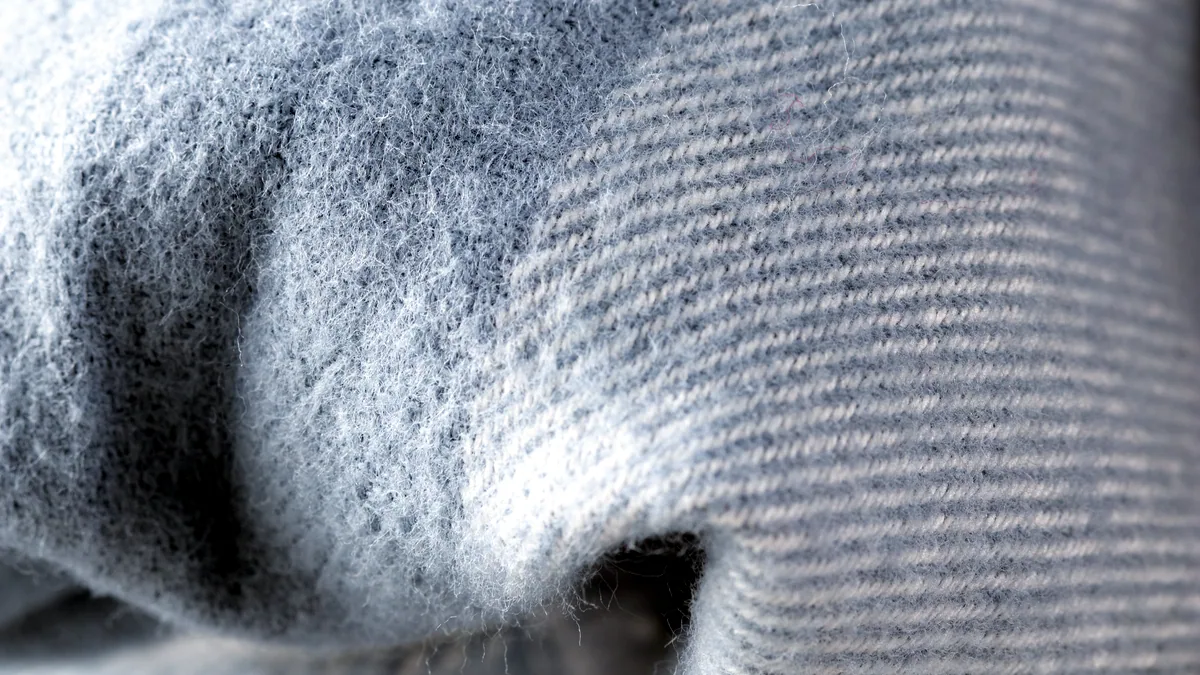
What merino wool thermal underwear for women is
Merino wool thermal underwear for women is a base layer, not the outer shell, made to sit directly on the skin as the first of the 3 layers a woman wears when the weather turns cold. It comes in a light, a mid and a heavy weight, and the weight tells the wearer how much warmth the knit holds. The fibre that makes it works is merino wool, the fleece of the merino sheep, a breed raised for a soft, fine coat that has no coarse hair mixed in, which is what makes it comfortable against bare skin. Because the garment is the base, it does the work that the rest of the wardrobe relies on: holding still air close to the body and moving moisture off the skin, so that a jacket and trousers sit dry and warm on top of it.
How the crimped structure traps heat
The crimp is a wave, or kink, that runs along the length of each merino fibre, and it is the reason the wool holds heat. A straight fibre lies smooth, but a crimped one stands off its neighbours, and the gap between them traps pockets of still air that the body warms and that then stay warm. A single merino fibre carries 20 to 40 of these crimps per inch, and a dense knit stacks those gaps in three dimensions, so the finished garment is partly wool and partly a lattice of warm air. The finer the fibre, the more crimps fit into the same length, which is why a 19.5 micron merino holds more still air per centimetre than a 24 micron one. Heat loss from the body drops as that still air layer thickens, and this is the same principle a double glazed window uses to keep a room warm, with the trapped air doing the insulating between two surfaces.
How a thermal base layer works in cold, damp air
A thermal base layer works in cold, damp air by keeping the skin dry and holding a still air layer next to it, and both jobs depend on the merino fibre. Dry air next to the skin holds heat, so the crimped wool traps that air and the body keeps it warm. Damp is the enemy, because moisture against the skin conducts heat away about 25 times faster than still air does, so a damp base layer feels cold even before the temperature drops. Merino handles this in two ways at once. First, it wicks moisture: the scaly surface of the fibre, called the cuticle, carries sweat off the skin and out toward the surface of the knit. Second, it absorbs without feeling wet, holding moisture inside the fibre where it does not press cold against the body.
How much moisture merino can absorb
Merino can absorb up to 30 per cent of its own weight in moisture before it starts to feel damp to the hand, which is roughly 3 times the amount a cotton fibre of the same size holds. That is why a cotton thermal underwear feels heavy and cold after an hour of exercise, while a merino one still feels dry and warm. The absorbed water also releases a small amount of heat as it moves into the fibre, a slow warming effect the wearer notices on a walk. The key point for the base layer is that the garment keeps the skin side dry long enough for the body to stay comfortable, and then the fibre dries again as the moisture evaporates from the surface of the knit.
Which properties decide which fibre wins in which cold
Which fibre wins in which cold is decided by four properties, and the table below compares merino wool with the other materials a woman might choose for a thermal base layer, so she can match the fibre to her conditions. The properties are fineness, which controls softness and how much still air the knit holds; the warmth to weight ratio, which says how much heat a layer keeps per gram; moisture handling, which says how the fibre moves or holds sweat; and durability, which says how the garment survives repeated washing. Merino leads on the warmth to weight ratio and on comfort against skin, while polyester leads on drying speed and price.
| Property | Merino wool | Polyester | Cotton | Angora wool |
|---|---|---|---|---|
| Fibre fineness | 19.5 to 24 microns | 1 to 3 microns (synthetic) | 15 to 25 microns | 10 to 15 microns |
| Warmth to weight | High | Medium | Low | Very high |
| Moisture handling | Wicks and absorbs up to 30 per cent | Wicks fast, dries fastest | Holds water, dries slow | Wicks slowly, holds warmth |
| Feels against skin | Soft, no itch | Smooth, can trap odour | Soft when dry, cold when damp | Very soft, can felt |
| Durability after washing | Good, resists odour | Very good | Felts and shrinks | Fragile, felts easily |
Read against a day, the table sorts itself. On a dry day above 8 degrees, where a woman will not build up much sweat, merino and a light angora layer both feel warm, and the choice comes down to price and how often the garment will be washed. On a cold, damp day below 5 degrees, merino wins on comfort because it stays dry and warm against the skin, while cotton loses on every count. On a high exertion day, when a woman runs hard or works physically, a polyester base layer dries the fastest and is the sensible pick, because it moves moisture off the body quicker than any natural fibre, even if it holds odour more. The deciding rule is simple: match the fibre to how much sweat the activity makes and how cold the air is, and the merino base layer is the answer for the everyday cold, damp air that a UK winter gives most women most days.
Choosing merino thermal underwear for women
Choosing merino thermal underwear for women comes down to four checks, and a woman who runs through them will land on the right garment without guessing. The four checks are weight, fineness, fit and construction, and each one maps to one of the properties in the table above.
- Match the weight to the temperature, choosing light for 8 to 12 degrees, mid for 2 to 8 degrees and heavy for below 0 degrees.
- Check the fineness for comfort, reading the micron number on the label and aiming for 21 microns or finer for a layer that sits on bare skin.
- Choose a snug but not tight fit, so the knit holds its still air layer flat against the body without cutting circulation.
- Look for flatlock seams and a bonded waistband, because a base layer that rubs chafes the skin and undoes the warmth it provides.
For a UK wardrobe, a mid weight merino set in 19.5 to 21 microns covers most of the winter, and a woman who also walks in the coldest months adds a heavy weight pair for days under 0 degrees. This is the base layer that the rest of the outfit depends on, and once the crimped fibre is doing its part, the warmth inside a jumper and the warmth of the coat on top build on a foundation that stays dry and warm from the skin out.