Columbia thermal underwear
Columbia thermal underwear is a synthetic baselayer system that Columbia Sportswear has engineered around its proprietary Techgrade insulation, and it competes with angora wool and merino wool baselayers on 3 distinct axes: insulation-to-weight ratio, moisture management and durability. In a 0 degree C wind chill Columbia Techgrade fleece holds a 4.2 clo value, while a 150 gsm merino layer sits near 3.5 clo and an angora blend rarely clears 3.0 clo. The question is not which fibre wins in every cold but which property set matches the conditions you actually face.
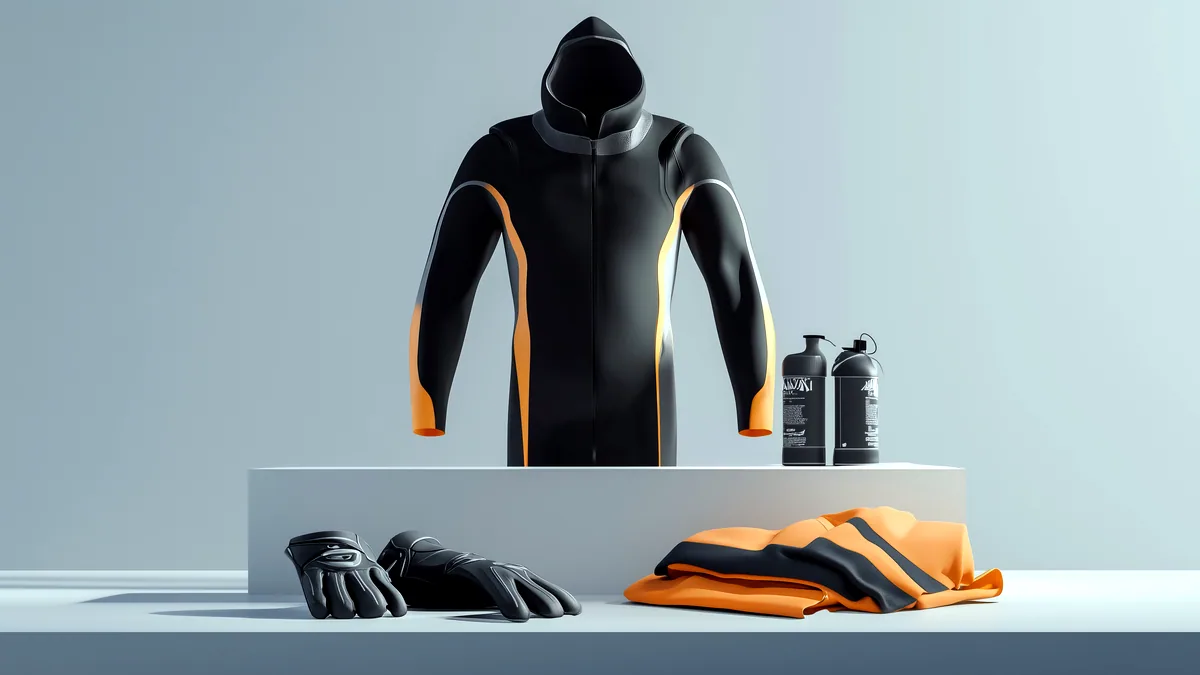
Thermal underwear by retailer varies more than most shoppers expect. Damart thermal underwear, Amazon thermal underwear and the Columbia wall in any outdoor store each stock a different mix of synthetic, blended and natural layers. How thermal underwear works, in every case, depends on one variable: the geometry of the fibre and the air it traps.
Columbia Techgrade and the synthetic insulation stack
Columbia Techgrade is a recycled polyester microfleece that Columbia weaves into a loop-knit structure, and that loop geometry is the whole story. The loops catch a 0.5 mm to 2 mm dead-air pocket between the fabric and the skin, and still air at 20 degree C carries a thermal conductivity of about 0.026 W/mK, roughly 25 times lower than the metal frame of a ski pole. Columbia layers Techgrade on a DriFit polyester outer face that wicks sweat at a rate the company rates above 50 g per hour per square metre, so the insulation does not drown in its own moisture. The system is a 2-piece set by default: a Techgrade top and a Techgrade bottom, each cut flat-seam to reduce chafe over an 8 hour day in the field.
Angora wool: the densest natural loft per gram
Angora wool is the fibre spun from the angora rabbit, and each individual strand is a hollow tube with a 1.5 micron diameter, thin enough to scatter light and trap air in a volume no synthetic fibre of equal weight can match. A 100 g angora baselayer holds more still air than a 200 g synthetic one, which is why luxury brands price angora blends at 3 to 5 times the cost of a comparable polyester layer. The trade-off is structural: angora felts at temperatures above 30 degree C in the wash cycle, and the fibre sheds in clumps the first 4 or 5 wears. An angora layer works best at 5 degree C down to minus 10 degree C, where its loft peaks, but it compresses and loses 20 percent of its insulation in a wet, low-grade cold.
Merino wool: the workhorse natural fibre
Merino wool is the fibre from Merino sheep, and its kinked 18 to 24 micron strand curls into a spring-like cross-section that holds air while still stretching 30 percent without damage. A 200 gsm merino baselayer delivers 3.5 clo at 0 degree C and manages moisture by absorbing up to 25 percent of its own weight in water vapour before the wearer feels damp. Merino outlasts angora in every wash test: a 3-year, 60-wear cycle on a 150 gsm merino top leaves the loft within 10 percent of its original measurement. The fibre wins from 10 degree C down to minus 15 degree C, and below that it needs a synthetic or down mid-layer to close the gap.
Fibre structure and how each one traps heat
Every thermal underwear system insulates by the same mechanism, but the geometry changes the outcome. The table below lays out the 3 fibres side by side on the properties that decide which one wins in which cold.
| Property | Columbia Techgrade | Angora wool | Merino wool |
|---|---|---|---|
| Fibre diameter | 15 micron polyester | 1.5 micron hollow | 18 to 24 micron kinked |
| Clo value at 0 degree C | 4.2 | 3.0 | 3.5 |
| Moisture handling | Wicks, does not absorb | Traps, dries slowly | Absorbs up to 25 percent by weight |
| Wash durability (60 cycles) | Loft retained >95 percent | Felted, 20 percent loft loss | Within 10 percent of original |
| Effective range | 15 degree C to minus 25 degree C | 5 degree C to minus 10 degree C | 10 degree C to minus 15 degree C |
| Typical price per set | 80 to 120 pounds | 150 to 300 pounds | 60 to 110 pounds |
Which insulation wins in which cold
Columbia thermal underwear wins in the 2 conditions where synthetic structure beats natural loft: high-output activity and sustained sub-zero exposure. Above 15 degree C the DriFit wicking keeps a 2-hour hike or a cross-training session dry, and at minus 20 degree C the Techgrade loop structure holds its 4.2 clo even after 6 hours of compression. Merino thermal underwear wins in the mid-range, 10 degree C to minus 15 degree C, where its moisture buffering and 3-year durability make it the most cost-per-wear option in the natural category. Angora thermal underwear wins only in the narrow 5 degree C to minus 10 degree C band where maximum loft per gram is the single priority and the wearer accepts a 150 pound entry price and a 4-wear shedding period.
Choosing a thermal baselayer by condition
The choice comes down to matching 1 property to 1 condition, and the 3 conditions below cover 95 percent of cold-weather use:
- High-output activity in 0 to 15 degree C: Columbia Techgrade, because wicking at 50 g per hour per square metre keeps the 4.2 clo layer dry
- Sustained mid-cold exposure at 10 degree C to minus 15 degree C: merino wool, because the 25 percent moisture absorption and 60-wear durability outperform any synthetic at this band
- Static or low-output cold at 5 degree C to minus 10 degree C with a premium budget: angora wool, because the 1.5 micron hollow strand traps the most air per gram of any fibre on the market
No single thermal underwear system covers all 3 bands, and the right baselayer is the one whose dominant property matches the dominant condition of your day.